Sunday, August 25, 2013

Late August Gardening

Late summer is a great time to be a gardener -no pain, all gain (well, almost).  There aren't many chores out there ,but plenty to enjoy.  Not too many new weeds, but lots of butterflies.  I don't worry much about watering any more either - mostly because I'm so tired of it.  It's the time of summer when you can reap the rewards of all your work.

Sometimes there's a little too much to reap.  We were gone for a week and came home to this.
 
Fortunately, I have a great recipe for zucchini soup.  I love going out in my yard and picking dinner.


Tomatoes, peppers, zucchini, garlic, and basil, sauteed in garlic olive oil are fabulous over quinoa. These little orange tomatoes are extremely prolific.  All my other tomatoes have blossom end rot, but these little guys are unaffected.

 
The butterflies are all over the campanula and the phlox.
 
 
The hummingbirds love the buffet in our garden and I could have gotten a photo this afternoon if I had been carrying my camera.  There was one feeding on the hibiscus a couple feet from me, and he didn't care at all that I was right there. 
 
If you want late summer beauty in your garden, try shrub roses, sea holly, late-blooming daylilies, sunflowers, mystery lilies, and zinnias.


Looks like we'll be enjoying watermelon and cantaloupe soon.  It's my first time growing these.  I keep hearing that we don't have a long enough growing season.  We'll see.  I'll report on how it goes.


Thursday, August 8, 2013

A Hot Color Palette

Did you ever see a beautiful garden full of color and wonder how to get that kind of impact without having a yard that is a mish-mash?  Too many colors are distracting.  If you limit your choices to colors that are next to each other on the color wheel, you can have dramatic beauty that isn't overwhelming or messy looking.  I wrote in June about designing with cool colors - purples, blues, and pinks.  This is a tranquil, serene palette and I chose it for my front yard.  But in the backyard, I wanted a more high-energy mood.  Hot colors - reds, oranges, and yellows don't look washed -out in bright sunlight.  To keep hot colors from being too "in-your-face", make sure there is plenty of green foliage in between bursts of color.  Green is a neutral color in the garden and gives your eyes a place to rest.

Flowers aren't the only thing to think about. The plant's foliage, fruit and autumn color might also work into your color scheme.

 I added this ornamental pepper to a flower bed for its hot red fruit.
There is also garden art and furniture to add to your color scheme.  Adding a touch of a complimentary color (opposite on the color wheel) makes both colors appear more vibrant.

I love the blue bottles on this bottle tree hovering above a clump of yellow daylilies

You can keep the hot colors going from spring to fall.  There are red, orange, and yellow tulips, yellow crocus, daffodils, and allium.  Here are some warm-colored flowers that are currently blooming in my garden.


Butterflies and hummingbirds love hot colors!
Hibiscus bloom in the house all winter too.


A little bit later in August, zinnias, snapdragons and orange mums will keep the hot colors going, along with the yellow, red, and light orange roses that have been blooming all summer.  

I've bought plants that I thought would fit in with a warm palette, but when they bloomed, it turned out that they were a blue-red instead of a hot red, or a cool pink instead of a coral pink.  If something seems to clash, I just relocate it to my cool-color garden in the front yard.  There is a perfect home for every plant!

Tuesday, June 25, 2013

Get out there and weed!

This may not be a glamorous garden topic, but it is timely.  If you haven't been out doing battle with the weeds yet, this is your last chance.  By July, your perennials  will have given up hope of being rescued.  April is the best time to start if you want pristine beds, but it may not be too late.  I actually enjoy weeding - talk about instant gratification!  You go out there it may be a mess, but in a couple of hours, what a transformation!   Not many tasks have that kind of obvious immediate impact.

Weeds are in the eye of the beholder.  The definition is simply, "an unwanted plant".  This year, I'm calling sunflowers a weed.


They must have come from the birdseed we put in our feeder.  I pulled most of them, but left a few for fall color.  They're easy to identify, but some things aren't.  My husband keeps pulling the plant in the center of this photo, thinking it's a thistle.


It's actually a beautiful pink poppy that I seeded early in spring.  Sometimes it's best to let things grow a little while before deciding whether to pull or not.  I thought I had a huge crop of weeds three feet tall until a friend  pointed out that they were asters.  Oh, yeah.  I knew that.  They sure do look like weeds though.

Weeds that have not yet flowered can be pulled and left on the ground.  However, if they are already flowering, throw them in the garbage!  The flowers contain seeds that are viable even after you pull the plant. You 'll get another generation of weeds if you leave them on the ground.

There is more to weeding than just pulling at the top of the plant.  It is satisfying to see that nasty foliage disappear, but if the root remains, your enemy will quickly return.  Pulling weeds when the soil is moist makes it easier to get the entire root.  And you need to lift up the leaves of other plants to uncover the enemy's hiding spots.  Weeds are devious.  They seem to mask themselves like chameleons among plants that they resemble.
This mystery weed  hiding under a ninebark was easy to spot.  But he didn't go peacefully.  I had to use my pick ax to dig him out.  The pick ax is my favorite weeding tool. I chop into the soil next to the weed, pry up, and the root lifts out.

If weeds have grown into the middle of a perennial, you can dig out the entire clump, pull out the weeds, and replant the flower.  Just make sure you get out all of the weed roots.

A 3-4 inch layer of mulch goes a long way in preventing weeds, as does getting out there and destroying the first generation in early spring before you get a second and third generation by midsummer.  I prefer to take a walk around the yard daily and pull a dozen rather than wait and weed for hours once a month.  It doesn't feel like "weeding" when you're taking a stroll with a glass of wine in the evening (just a suggestion).


I have no idea what this mystery weed is.  I let it grow for a while, thinking it might be something I forgot I planted, but it doesn't look familiar, so it's time for the pick ax.  If anyone recognizes it, let me know what it is (the pink flower is not attached - that's perennial geranium).


This photo has nothing to do with weeds.  I just wanted to end on a happier note.  This is why we work so hard!

Wednesday, June 5, 2013

Designing With Color

     When adding new plants to the garden, it's so tempting to want something new and different.  What we already have seems boring.,  We want to mix it up a little!    Many people add to their gardens a little at a time with one or two of each new plant.  After doing this for a while, they realize that it doesn't look the way they had envisioned their yard to be, but they aren't sure what 's wrong.  It turned out to be a mish-mash of colors, heights and shapes without a unifying theme.
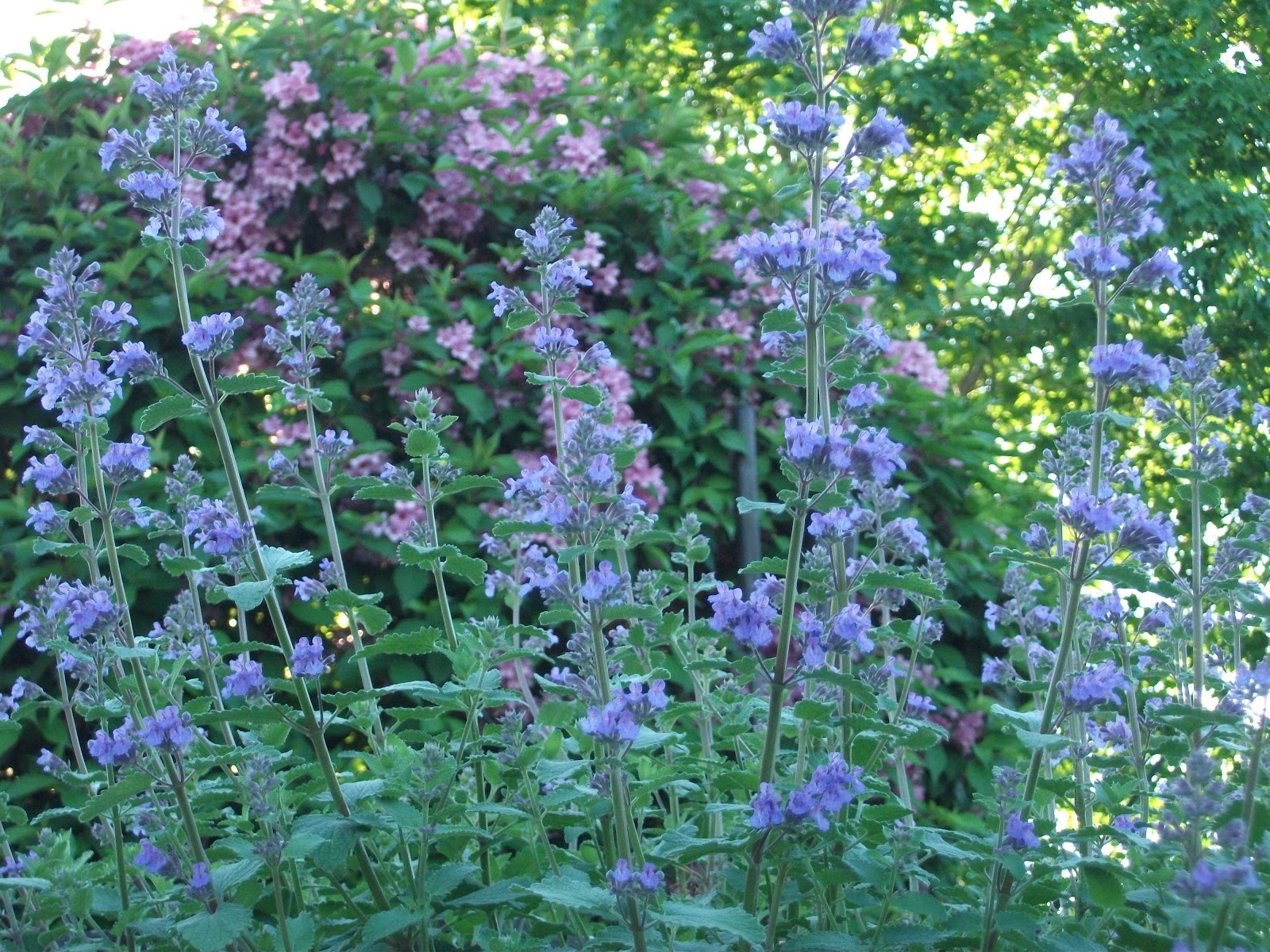
    
     One way to avoid this look is to choose a color palette for each area of your yard.  When there are too many colors in one space, the eye can't rest in any one place.  You are bombarded with so much stimulus, that you don't know where to look.  A garden that is limited in color appears more unified and soothing.  It can be difficult to be selective about color choices.  There are so many gorgeous plants and we want them all!  If you want, you can have them all - just not in the same part of your landscape.


This is my front yard garden.  It's shades of purple, blue, pink. and white.  I don't feel limited at all.  There are so many variations in size, texture and height and the garden changes continually from May to September.  It never looks the same two weeks in a row.


These are things that are in bloom currently.  Later in summer there will be many other plants in similar shades, so that as one ceases to provide color, another will take over.  The garden will tranistion into fall, finishing with purple asters and pink Clara Curtis daisies. 


Meanwhile, the backyard is blooming in warm  colors - shades of yellow, orange, and red.  You can have every color of the rainbow!  More on the topic of a unified garden design in my next post.


Sunday, May 12, 2013

Tulip Time


At last - color!  I don't do bulbs.  But fortunately, Ralph does.  He planted hundreds last fall.  He  also sticks gnomes all over and then tells everyone that I collect them.

We top-dress all the beds with compost every year and I always mean to get it done before the tulips bloom. But I never make it in time, so I end up having to spread it around the plants, and by the time I'm halfway through, I'm just throwing shovelfuls of compost all over and burying the tulip blooms.  This year it was done early enough so that didn't happen (okay, I didn't do it this year, Ralph did).

Compost is the key to a garden that produces flowers and vegetables consistently year after year.  I've often heard people say that their garden was great the first couple years, and then declined rapidly.  Even if you amended the soil initially, you need to replenish with organic material every year.  It's not difficult to do.  We get trailer loads of it from the municipal compost site, but the average gardener doesn't need that much.

If you don't have access to compost, you can enrich your soil by spreading a layer of shredded leaves on your gardens in fall.  When you rake them up, leave them in a wide circle on the lawn, about six inches deep, and mow over them.  Then spread them in the garden beds about two inches thick.  Use a much thicker layer in vegetable gardens - up to six inches.  Vegetables like a lot of organic matter and it has to be replenished every year, or you will notice that you don't get the yield you used to.  You will have to turn over the soil in spring, but nature will have done most of the work for you.  I always have loose, rich soil with dozens of fat earthworms in my vegetable garden.  And a fantastic crop.  Of course, in perennial beds you can't turn in leaves or compost, but that's alright.  The soil will benefit from top-dressing. Rain and earthworms will bring the nutrients to the roots.

I wonder if that red tulip feels out of place in a sea of purple and white.  Don't know how that got in there.

Bouquets in the house are the best reason to plant tulips.


Redbuds are blooming.
This is what happens when deer get to your rhododendrons.


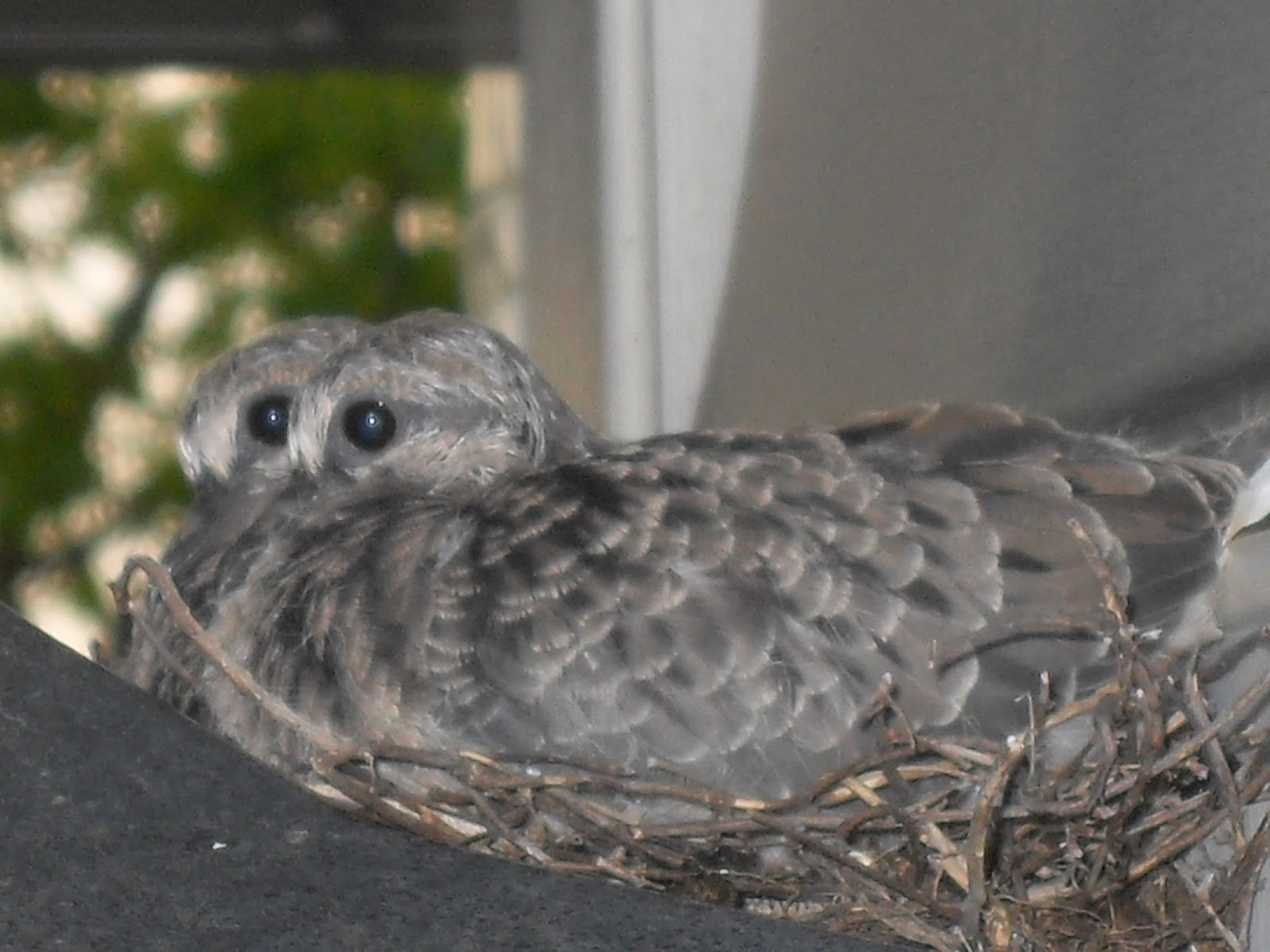
In my last post I showed mama mourning dove sitting on her nest. Here are the results of her hard work.


Tulips are fleeting - enjoy them while you can!

Tuesday, May 7, 2013

Better Late Than Never


Finally!  Spring has arrived in southeastern Wisconsin.   The last time I posted, it was in the 40's.  It's been in the 70's the past several days.  I've been seeing the migratory birds (orioles, thrushes) and have bouquets in the house again.


Birds are nesting all over.  Every year someone makes a nest above the porch light.  I don't know why that spot is so appealing.  This year, it's a mourning dove.


We're right around the median date of the last frost.  I'm a little late getting the early vegetables in, but it's been raining almost every day.  I'm trying grass clippings as the mulch this year.  I'll report on how this works.  I've always used shredded paper, but it breaks down so fast that I have to replenish it once a month.

It's time to divide perennials.  Don't be shy about it - just sharpen your shovel go for it!  Some people are afraid to divide, thinking they will damage the plant.  But you improve the health and bloom of many plants by breaking them up.  Wait to divide iris until after they are done blooming, but almost everything else should be divided now.  May is the one of the busiest months for a gardener.  Divide established plants and install new perennials now, and the next few months are mostly watering, weeding, and deadheading. 

 
I know this doesn't qualify as a plant, but it adds color when there isn't much blooming.  Ralph makes the bottle trees. My part is to drink the wine so there are bottles to put on the trees.